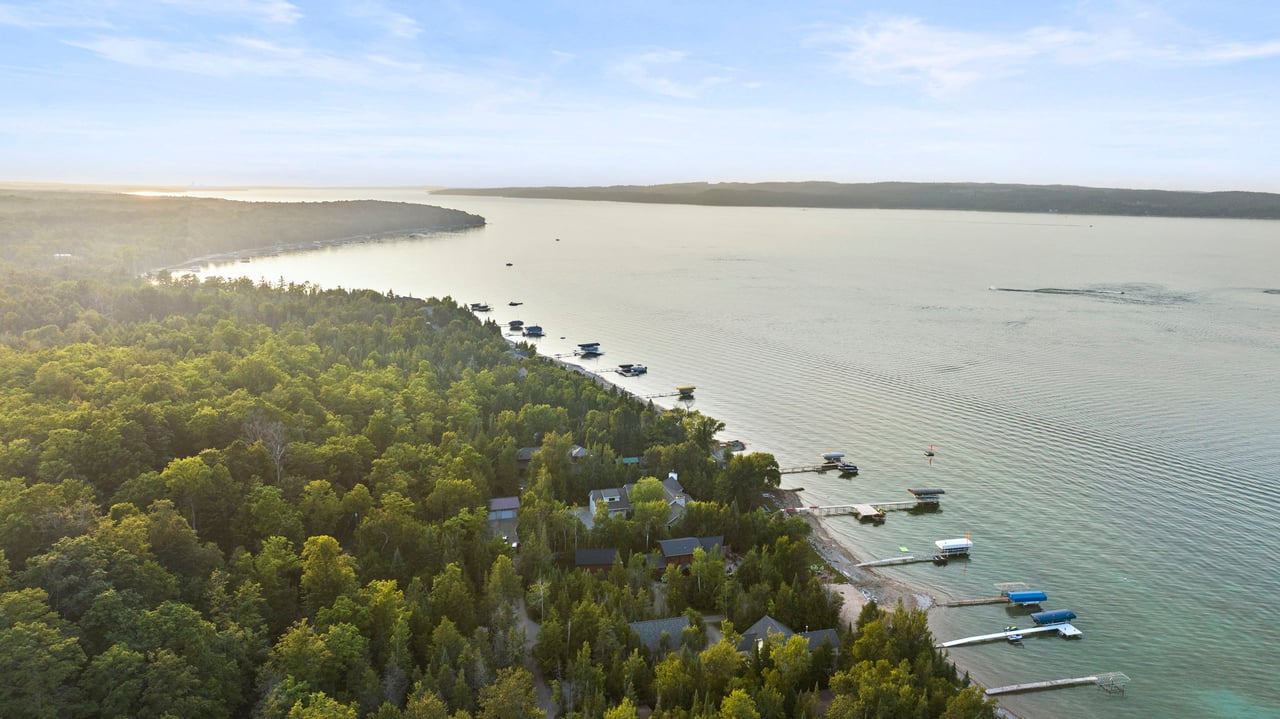
Two East Jordan listings can both say “Lake Charlevoix access,” yet deliver completely different on-the-water experiences. If you plan to boat, swim, or simply enjoy the view, the exact type of frontage matters a lot. You want clarity before you invest, not surprises after closing. In this guide, you’ll learn how private, shared, deeded, and canal or river frontage differ around East Jordan’s South Arm, what rights usually come with each, and how those differences affect value and daily life. Let’s dive in.
Frontage types on Lake Charlevoix
Private (direct) frontage
A property with private frontage touches the lake, and your property line reaches the shoreline. You have exclusive access along your section of shore, subject to state and local rules. Around the South Arm, you often see single-family homes with a private dock or boathouse if permitted, plus beach or natural shoreline vegetation.
- Pros: Exclusive use, more control over dock placement and shoreline improvements with proper approvals, greater privacy.
- Cons: You carry all maintenance, dock upkeep, and permit compliance, and this type typically commands the highest purchase premium.
Shared or association access
Homes in a subdivision, condo, or along a private road may share a common beach, dock slips, or a community launch. The shoreline itself is not yours alone. Use is governed by association rules and shared-cost maintenance.
- Pros: Lower per-owner maintenance, shared costs for amenities, often a more affordable way to enjoy the lake.
- Cons: Rules and slip allocation depend on recorded documents; dock space can be limited, and resale value can hinge on HOA quality and governance.
Deeded access
Some inland parcels gain lake access through a separate lot or recorded easement that is written into the deed or plat. The rights can be exclusive to certain lots, or shared among many.
- Pros: Legal access to the lake at a lower purchase price than private frontage.
- Cons: Practical use can be limited by parking, crowding, hours, seasonality, and the specific deed language or HOA rules. Always verify the recorded instrument.
Canal and river frontage
These parcels sit on a canal, channel, or the Jordan River that connects to the South Arm. You get direct water access and may dock on a quieter waterway, but your view and boat maneuvering differ from open-lake frontage.
- Pros: Protected water for small boats, quieter setting, often easier docking.
- Cons: Narrower views, variable depth and flow, potential restrictions on boat size and dock rules where river habitat or wetlands exist.
What your rights really include
Owning waterfront in Michigan comes with riparian rights, which generally cover reasonable use of the water for access, boating, and mooring. Those rights are not unlimited. The state controls submerged lands under the public trust doctrine, so building or maintaining docks, hoists, seawalls, or doing shoreline work often requires approvals.
Before planning improvements, you should confirm what is allowed for your parcel. Local zoning and shoreland setback rules in the City of East Jordan and Charlevoix County may affect how close you can build and what you can add. State-level approvals may apply where work touches bottomlands, wetlands, or fish habitat. Floodplain and wetland layers can also change what is feasible. The practical takeaway is simple: frontage does not guarantee a dock or structure. Approvals come first.
How frontage shapes daily life
If you want to swim before breakfast or hop on the boat at a moment’s notice, private frontage fits best. It offers immediate access and privacy, which is why it is usually the most sought-after.
Shared or deeded access requires more planning. You might walk or drive to a common area, follow HOA rules for guests, or wait-list for slips. The distance and coordination can change your routine, even if your mortgage and taxes look similar to homes with private frontage.
On a canal or the Jordan River, you get protected mooring and calmer water. This setup is handy for small boats and easier docking. Still, you may trade away big-water views and room for larger powerboats, and you must stay mindful of channel depth and flow.
Value, costs, and resale
All else equal, exclusive private frontage typically commands the highest price per linear foot. But the true value is about usability. A broad, gently sloping shoreline with permissible dock rights usually beats a marshy or irregular edge, even at the same frontage length.
Shared access values vary with the quality of the amenity. Well-maintained beaches, clear slip allocation, and stable dues support stronger resale. Deeded-access-only properties tend to sell at a discount compared to direct frontage, though they can outperform inland comparables if the access is convenient and well documented.
Waterfront ownership carries ongoing costs. With private frontage, you own the dock maintenance, shoreline repairs, and a larger slice of liability and insurance exposure. In shared or association scenarios, those costs spread across owners, but you add HOA dues and potential special assessments. Lenders and insurers will consider flood risk, erosion, dock exposure, and in river settings, flow and ice.
Seasonal and environmental factors
Northern Michigan’s seasons add unique considerations. Ice can damage docks or lifts, and ice-out timing affects your boating season. Water levels shift year to year, changing beach width and dock usability. In channels and along the Jordan River, depth and flow often vary with storms and season.
Some shorelines and riverbanks include sensitive habitat or wetland areas. That can limit the scope of docks, dredging, or shoreline hardening. The earlier you confirm these constraints, the better you can compare listings on a true apples-to-apples basis.
Due diligence checklist
Use this list to verify the exact rights and responsibilities before you write an offer.
Request from the seller or listing agent:
- Recorded deed and any recorded easements or covenants related to water access.
- Current title commitment or preliminary title report showing exceptions and easements.
- A current, stamped survey that shows lot corners, shoreline, and improvements.
- HOA or condo documents if access is shared: declaration, bylaws, rules, budgets, and recent meeting minutes.
- Property tax card and assessment details to confirm frontage classification.
- Seller’s disclosures, including any known disputes, erosion, or prior permits.
Confirm with public offices:
- Charlevoix County Register of Deeds and GIS for recorded easements, plats, and parcel boundaries.
- City of East Jordan planning, zoning, and building for setbacks, shoreline rules, and permits.
- State agencies for bottomlands and shoreline work approvals where applicable.
- FEMA flood maps for flood zone and potential insurance requirements.
- Local lake groups for lake-level history, community norms, and shared amenity context.
Ask targeted questions:
- Is access exclusive to this parcel or shared? What recorded document grants it?
- Who owns and maintains docks and shoreline structures? How are costs shared?
- Any past or pending disputes over access or boundaries?
- Has shoreline work or dredging been permitted, and are those permits valid now?
- How was frontage measured for the listing, and at what water mark?
Watch for red flags:
- Vague phrases like “lake access” without a recorded reference.
- No survey when frontage drives value.
- Claims based on long-time use without a recorded easement.
- Past litigation or unresolved boundary issues in county records.
Quick comparisons by goal
- You want privacy and instant access: Prioritize private frontage and confirm dock permissions.
- You want value with low hassle: Look at shared or association access with clear rules, ample slips, and solid maintenance history.
- You want lake use at an inland price point: Deeded access can work if the recorded language is strong and practical use is convenient.
- You want protected mooring and quieter water: Canal or Jordan River frontage may be ideal; verify depth, flow, and boat-size limitations.
How we help you compare
We specialize in Northern Michigan waterfront and understand the nuances of the South Arm and the Jordan River corridor. We help you confirm what a listing truly offers by reviewing recorded documents, coordinating surveys, and connecting you with the right local offices early in the process. We also put lifestyle first, so you match your boating, swimming, and privacy goals to the right frontage type.
If you are weighing similar East Jordan listings with very different access language, let’s talk through the details and prioritize your must-haves. When you are ready, schedule a Free Consultation with Jonathan Crane.
FAQs
What does private frontage mean in East Jordan?
- Private frontage means your property line reaches the shoreline and you hold exclusive access along that stretch, subject to state and local rules and any required permits.
How does shared access work on Lake Charlevoix?
- Multiple owners use a common shoreline or amenity under recorded documents, with HOA rules covering beach use, dock slips, guest policies, and shared maintenance costs.
What should I verify with deeded access?
- Confirm the recorded instrument, who can use it, what uses are allowed, whether parking or docking is included, and any limits on timing or seasonality.
Is canal or Jordan River frontage good for boating?
- It often provides protected mooring and easy docking for smaller boats, but you should verify channel depth, flow, and any size or speed restrictions before purchase.
Why does “usable” waterfront matter for value?
- Gentle, accessible shoreline with permissible dock rights typically drives higher value than irregular or marshy frontage, even at the same linear footage.
Do I automatically get a dock slip with shared access?
- Not necessarily; slips may be limited, allocated by HOA rules, or not available at all, so always review the association documents before you buy.