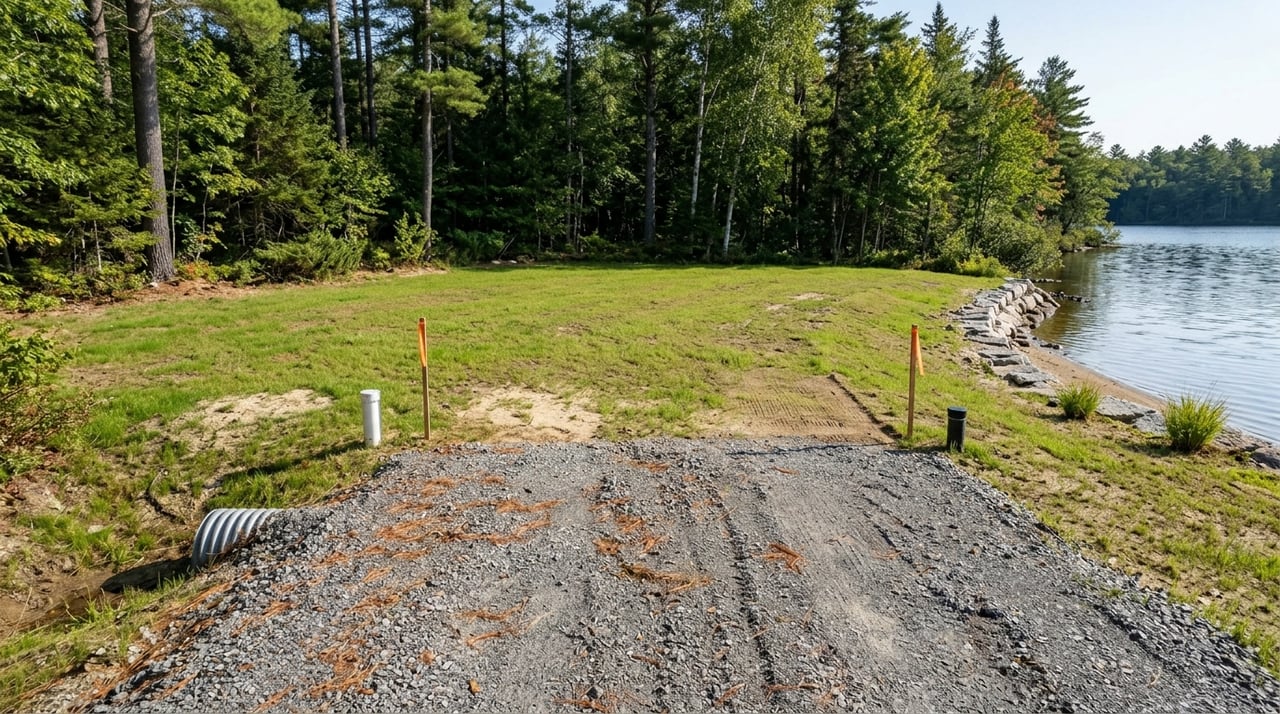
Buying waterfront land in East Jordan can feel like buying possibility itself. You picture the view, the dock, and the home you want to build, but raw land has more moving parts than an existing house. If you want to avoid costly surprises, you need to know what to check before you close. This guide walks you through the key due diligence steps so you can move forward with more confidence. Let’s dive in.
Why East Jordan Waterfront Land Needs Extra Review
East Jordan sits at the southern end of Lake Charlevoix’s South Arm, and Lake Charlevoix is identified in the city’s master plan as Michigan’s third-largest inland lake by surface area. That setting is a big part of the appeal for buyers looking for a custom retreat or future lakefront home.
At the same time, waterfront land often comes with added site constraints. Local planning materials and the regional hazard mitigation plan warn that undeveloped waterfront parcels may include wetlands, floodplains, or soils that are not ideal for septic development. That means a beautiful lot is not always a simple lot.
For you as a buyer, the goal is not to be cautious for caution’s sake. It is to confirm early whether the parcel supports your plans before you spend money on design, engineering, or construction prep.
Start With Jurisdiction First
One of the most important first steps is to confirm who governs the parcel. In this area, that can mean the property is inside East Jordan city limits or in South Arm Township, and that difference affects the rules, review process, and approval path.
East Jordan has its own codified ordinances, while South Arm Township has separate planning and zoning documents, planning commission schedules, and fee schedules for land-use permits, special-use permits, and parcel divisions. In practical terms, you should verify jurisdiction before you assume what can be built or how quickly approvals can happen.
This one step can save you time and money. It helps you avoid ordering plans for a home layout or lot use that may not fit the governing rules for that parcel.
Confirm the Lot Is Actually Buildable
Waterfront land listings often focus on frontage, views, and privacy. Those features matter, but buildability matters just as much if your goal is to construct a home or improve the site.
Charlevoix County building requirements say applications and plans must be reviewed before a permit can be issued. The county building permit form also asks whether the site is in a floodplain or low-lying area, which tells you how central site conditions are to the permit process.
A parcel can be attractive on paper and still have challenges tied to setbacks, floodplain conditions, or nonconforming lot size. Before moving forward, you will want to understand whether the lot can reasonably support the home and improvements you have in mind.
Check Utilities Parcel by Parcel
Do not assume that a waterfront lot has the same utilities as the property next door. In East Jordan, utility access varies by location.
The city’s 2025 economic development plan draft says East Jordan maintains a public water system and that most of the city is served by public water and sanitary sewer, though one west-side area is not connected to sewer. The city’s master plan also says city water serves several residential properties along M-66 in South Arm Township.
The takeaway is simple: verify utility availability for the specific parcel. A lot’s location near the lake or near town does not guarantee public sewer, public water, or both.
Understand Septic and Well Requirements
If the parcel is not served by municipal sewer, septic and well review becomes a major part of your due diligence. In Charlevoix County, building materials state that a valid septic and well permit is required from the Health Department of Northwest Michigan.
The Health Department of Northwest Michigan says permits are required for sewage treatment and disposal systems and for water-supply systems under the District Sanitary Code. It also states that it is unlawful to construct, repair, alter, or extend those systems until permits are issued.
That agency also performs site evaluations for real estate buy and sell situations in Charlevoix County. According to its 2025 permit application materials, an evaluation may take up to two weeks after the application is received, and extra time may be needed for Miss Dig utility marking.
If you are buying land for a future build, this step is worth doing early. It helps answer one of the biggest questions with vacant land: can the site support the systems the home will need?
Verify Legal Access and Driveway Issues
Access can be easy to overlook when you are focused on shoreline and views. Still, it is one of the most important items to confirm before closing.
The county building permit application asks for the correct address and flags floodplain or low-lying conditions, while county building requirements direct applicants to the Charlevoix County Road Commission for driveway culverts. That means legal and physical access is not something to assume, especially on undeveloped parcels.
You will want to confirm that the parcel has clear access and understand what may be required to create a usable driveway. If the lot needs a culvert or other access work, that can affect your timeline and budget.
Plan for Soil Erosion Rules
Waterfront construction often triggers more review than inland construction. In Charlevoix County, a soil erosion permit is required if your project is within 500 feet of a lake or stream or if more than one acre of earth is disturbed.
For many waterfront lots, that means site prep alone may require another layer of approval. If you are planning grading, driveway work, excavation, or foundation work near the shoreline, you should account for this early.
This does not mean your project cannot move forward. It simply means that waterfront building usually works best when you understand the permit path before you finalize your plans.
Know When EGLE May Be Involved
If your plans include any work at the water’s edge, state review may come into play. Michigan EGLE is the key regulator for shoreline and land-water interface questions.
EGLE states that wetland fill, dredging, and other development in wetlands can require a permit. Its inland lakes and streams program also requires permits for certain construction on inland lakes and streams, and its land-and-water-interface guidance explains that the joint permit application covers projects where land meets water.
Shoreline protection projects may also require review under EGLE’s wetland rules. So if you are thinking beyond the house itself and considering a seawall, shoreline stabilization, fill, dredging, or similar improvements, this should be part of your early due diligence.
Review Title, Easements, and Restrictions
A waterfront parcel may look straightforward from the road or shoreline, but the recorded documents can tell a more complete story. Easements, access rights, restrictions, and transfer history can all affect how you use the property.
Charlevoix County’s Register of Deeds offers online deed-record searching and image purchase. That resource can help with reviewing recorded documents tied to the parcel.
This step matters because access, utility routes, and use limitations are not always obvious during a showing. A careful title and records review can help you spot issues before they become expensive surprises.
Build Your Due Diligence Team
Buying waterfront land usually requires more coordination than buying a finished home. The most efficient path is to bring the right local contacts into the process early.
Based on the local approval process, your review team may include:
- The applicable city or township zoning office
- A licensed surveyor
- Charlevoix County Register of Deeds
- Health Department of Northwest Michigan for septic and well review
- Charlevoix County Road Commission for culverts and access questions
- Michigan EGLE for shoreline or wetland questions
You may not need every one of these contacts for every parcel. But for waterfront land in East Jordan, having the right experts involved early can make your decision much clearer.
Questions to Answer Before You Make an Offer
If you want a practical way to evaluate a lot, start with the questions local guidance points to most clearly. These are the issues that tend to shape whether a waterfront parcel fits your plans.
Ask these before you move forward:
- Which jurisdiction controls the parcel?
- Does the property have legal access?
- Is public water or sewer available, or will you need a well and septic system?
- Can the site support a well and septic system?
- Are wetlands, floodplain conditions, or soil erosion permits likely to affect your plans?
- Do you need land-division or special-use approval before closing?
These questions are simple, but they can save you from making an emotional land purchase without the facts you need.
A Smarter Way to Buy Waterfront Land
The best East Jordan waterfront land purchases usually happen when vision and diligence work together. You can absolutely pursue the lakefront lifestyle, the custom design, and the long-term value that comes with owning land in a place this special, but you want to do it with clear eyes.
We always encourage buyers to treat raw land differently than an existing home. With the right local research, you can better understand what you are buying, what it may take to improve it, and whether it aligns with your goals.
If you are exploring waterfront land in East Jordan or anywhere around Northern Michigan’s lake communities, Jonathan Crane can help you evaluate opportunities with a local, hands-on approach.
FAQs
What should you check first when buying waterfront land in East Jordan?
- First, confirm whether the parcel is governed by East Jordan or South Arm Township, because zoning rules, permit paths, and approval processes depend on jurisdiction.
How do you know if an East Jordan waterfront lot is buildable?
- You need to review zoning, setbacks, floodplain or low-lying conditions, and site constraints through the applicable local jurisdiction and Charlevoix County building review process.
Do all East Jordan waterfront lots have public water and sewer?
- No. Local planning materials show that utility service varies by area, so water and sewer availability should be verified for the specific parcel.
When do septic and well permits matter for Charlevoix County land?
- If the parcel is not on municipal sewer or water, permits and site review through the Health Department of Northwest Michigan are a key part of determining whether the site can support development.
When is an EGLE permit needed for East Jordan waterfront property?
- If your plans involve wetlands, dredging, shoreline work, or certain construction where land meets water, Michigan EGLE review may be required.
Why does access matter when buying vacant waterfront land in East Jordan?
- Legal and physical access affect whether you can realistically build and use the property, and driveway or culvert requirements may need review through the Charlevoix County Road Commission.